Quote to Cash
概要
Quote-to-Cash(O2C)プロセスは顧客アカウント管理、注文処理、請求、売掛金の機能を包括しています。このプロセスの調整は Enterprise Applications チームが所有しています。
このページはクロスファンクショナルなページであり、Quote to Cash(Q2C)システムと基盤となるデータシステムおよびプロセスの情報源として機能することを目的としています。
効率的な Quote-to-Cash システムは、GitLab サブスクリプションの購入、有効化、管理を可能な限り簡単にします。
顧客満足度を向上させ、GoToMarket(GTM)プロセスを合理化し、会社の収益成長を加速させます。- すべてのソースシステムにわたる最も重要なビジネスオブジェクト/エンティティのデータ間の
一貫性を確保します。 - すべてのコアビジネスに重要なオブジェクトの
マスターデータオブジェクトは、すべてのシステムにわたって同じ定義とデータを持ちます。 - すべてのデータソースシステム間に適切な
調整/同期が存在します。Zuora と CustomerDot、SFDC と GitLab.com の間、および Zuora Billing Object Model と CustomersDot の 1:1 マッピングが含まれます。 データ品質を向上させ、有料ネームスペースへの転換の旅、特定のネームスペースの最初の有料サブスクリプション、無料/トライアルから有料への転換分析などを理解するための単一の系譜を確保します。
チーム
Quote-to-Cash システムのプロジェクトとイニシアチブは、多くの場合、機能やチームをまたぐ密接な連携が必要です。最も頻繁に関与するチームは:Enterprise Applications、Billing Ops、Fulfillment、Field Operations、Support、Data。
システム
Q2C システムは、Salesforce、Zuora(CPQ、360、Billing、Revenue)、CustomersDot、NetSuite などのいくつかのシステムで構成されています。
Salesforce
- Salesforce は CRM ツールとして、顧客のリード、コンタクト、アカウント、商談、見積もりの管理に使用されています。
- Salesforce は GitLab のEnterprise Applicationsチームが所有し、プロセスオーナーからの変更を実装します。
- 見積もりプロセス自体はDeal Desk チームが所有しています。
Zuora CPQ
- Zuora CPQ は、Sales Assisted のディールに使用する Configure、Price、Quote ツールです
- Zuora CPQ は Salesforce のマネージドパッケージで、見積もり承認のためにEnterprise Applicationsによって拡張されています
- 見積もり承認プロセス自体はDeal Desk チームが所有しています。
Zuora 360
- Zuora 360 は Zuora と Salesforce 間のストックコネクターで、Zuora のサブスクリプション情報を Salesforce に転送します。
- Zuora 360 のジョブはEnterprise Applicationsが所有しており、アドオンと更新ディールのための Salesforce における Zuora サブスクリプションデータの拡張もEnterprise Applicationsが所有しています。
- アドオンと更新プロセスはDeal Desk チームが所有しています。
Zuora Billing
- Zuora は請求と収益ツールとして、顧客サブスクリプション、支払い、請求書の管理に使用されています。
- Zuora は GitLab のEnterprise Applicationsチームが所有しています。
- 請求プロセス自体はBilling Operationsチームが所有しています
Zuora Revenue
- Zuora Revenue は、新しい ASC 606 および IFRS 15 収益基準を含む現在および将来の米国 GAAP に準拠した自動収益認識アプリケーションです。
CustomersDot(顧客ポータル)
- CustomersDot は顧客がサブスクリプションを管理するためにログインする際に使用されます
- GitLab のエンジニアが CustomersDot を作成し、Fulfillment チームが所有しています
- CustomersDot は Zuora と統合して、セルフサービスの購入とサブスクリプション管理を可能にします
NetSuite
- NetSuite は会社の Enterprise Resource Planning(ERP)システムで、主に Finance チームが管理しています。
- このプラットフォームにより、多次元レポートと多通貨・多事業体レポートが可能になります。総勘定元帳がここに存在し、すべての財務活動が最終的に記録されており、会社の財務状況を報告するために重要です。
アーキテクチャ
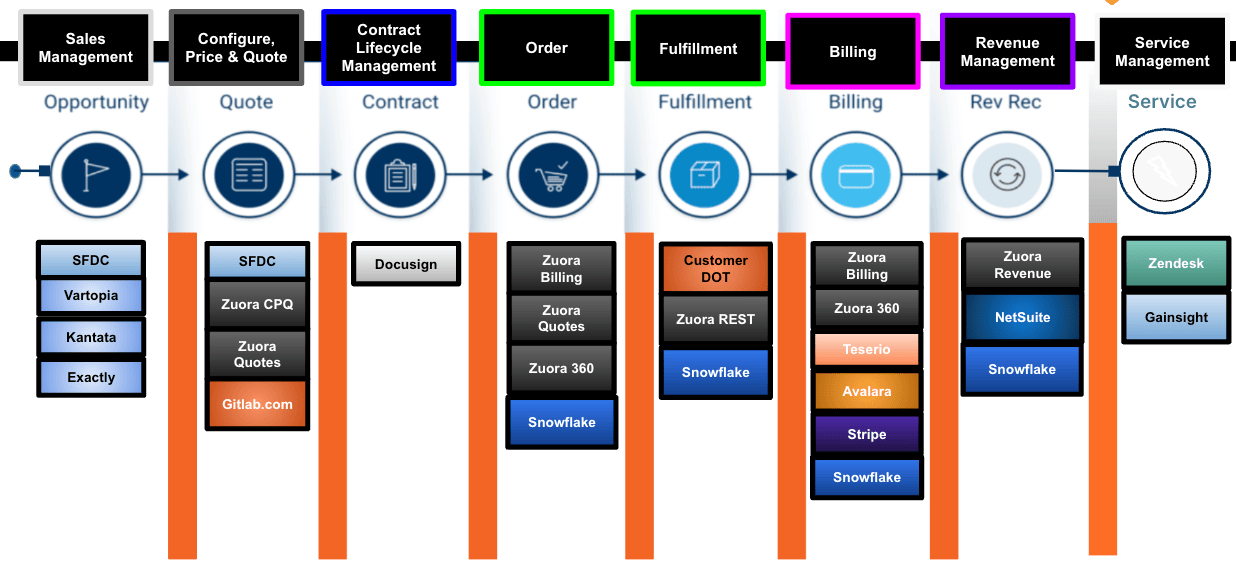
データオブジェクト
同等のデータオブジェクト
この表はシステム間の同等のデータオブジェクトを示しています:
| GitLab | CustomersDot | Zuora | SFDC |
|---|---|---|---|
| Organization | BillingAccount | Account | BillingAccount |
| User | User | Contact | Contact |
| - | Order | Order | 商談と主要見積もり |
| - | Subscription | Subscription | Subscription |
| License | License | - | - |
| - | Cloud Activation | - | - |
注意:SFDC では、SFDC BillingAccountは SFDC Account と同じではありません。SFDC Account は BillingAccount を複数持つことができます。
注意:CustomersDot の Order オブジェクトは Zuora の Order オブジェクトと同じではなく、定義が異なります。CustomerDot の Order は Zuora の Order よりも、Zuora の Subscription に近いです。CustomersDot の Order オブジェクトについては、さらなるアーキテクチャと定義の作業が必要です。
CustomerDot オブジェクトモデル
以下は新しく提案されたデータアーキテクチャのデータベース ERD の焦点を絞ったビューです。
erDiagram
  CustomersDotUser ||--o{ CustomersDotBillingAccountMembership : "has many"
  CustomersDotUser ||--o{ ZuoraContact : "has many"
  CustomersDotBillingAccount ||--o{ CustomersDotBillingAccountMembership : "has many"
  CustomersDotBillingAccount ||--o{ CustomersDotCloudActivation : "has many"
  CustomersDotBillingAccount ||--o{ CustomersDotLicense : "has many"
  CustomersDotBillingAccount ||--o{ CustomersDotOrder : "has many"
  CustomersDotBillingAccount ||--|| GitLabOrganization : "has one"
  CustomersDotCloudActivation ||--o{ GitLabCloudActivation : "has many"
  CustomersDotLicense ||--o{ GitLabLicense : "has many"
  CustomersDotUser ||--|| GitLabUser : "has one"
  CustomersDotOrder ||--o{ CustomersDotSubscription : "has many"
  CustomersDotSubscription ||--|| ZuoraSubscription : "has one"
  GitLabUser ||--o{ GitLabMember : "has many"
  GitLabOrganization ||--o{ GitLabMember : "has many"
  GitLabOrganization ||--o{ GitLabLicense : "has many"
  GitLabOrganization ||--o{ GitLabCloudActivation : "has many"
  ZuoraAccount ||--o{ ZuoraContact : "has many"
  ZuoraAccount ||--o{ ZuoraPaymentMethod : "has many"
  ZuoraAccount ||--o{ ZuoraOrder : "has many"
  ZuoraAccount ||--o{ ZuoraSubscription : "has many"
  ZuoraOrder ||--o{ ZuoraSubscription : "has many"
  ZuoraAccount ||--|| CustomersDotBillingAccount : "has one"
  SFDCAccount ||--o{ ZuoraAccount : "has many"
  SFDCAccount ||--o{ CustomersDotBillingAccount : "has many"

  CustomersDotBillingAccount {
    bigint id
    string zuora_account_id
    string zuora_account_name
    string zuora_account_number
    string zuora_account_entity
    string zuora_account_vat_id
    string salesforce_account_id
    timestamp created_at
    timestamp updated_at
  }
  CustomersDotBillingAccountMembership {
    bigint id
    bigint user_id
    bigint billing_account_id
    timestamp created_at
    timestamp updated_at
  }
  CustomersDotUser {
    int id
    string first_name
    string last_name
    datetime created_at
    datetime updated_at
    string email
    string encrypted_password
    string reset_password_token
    datetime reset_password_sent_at
    datetime remember_created_at
    integer sign_in_count
    datetime current_sign_in_at
    datetime last_sign_in_at
    inet current_sign_in_ip
    inet last_sign_in_ip
    string provider
    string uid
    string country
    string state
    string city
    string zip_code
    string vat_code
    string company
    boolean billable
    string access_token
    string confirmation_token
    datetime confirmed_at
    datetime confirmation_sent_at
    string unconfirmed_email
    string address_1
    string address_2
    string company_size
    string authentication_token
    string phone_number
    boolean login_activated
    string refresh_token
    datetime_with_timezone access_token_expires_at
    datetime_with_timezone token_refresh_last_attempted_at
  }
  CustomersDotCloudActivation {
    bigint id
    bigint billing_account_id
    string activation_code
    string subscription_name
    boolean super_sonics_aware
    datetime seat_utilization_reminder_sent_at
    timestamp created_at
    timestamp updated_at
  }
  CustomersDotLicense {
    bigint id
    bigint billing_account_id
    uuid license_file_md5
    bigint creator_id
    datetime_with_timezone created_at
    datetime_with_timezone updated_at
    datetime_with_timezone last_synced_at
    datetime_with_timezone next_sync_at
    integer users_count
    integer previous_users_count
    integer trueup_quantity
    date expires_at
    date starts_at
    date trueup_from
    date trueup_to
    boolean trial
    boolean cloud_licensing_enabled
    string plan_code
    string plan_name
    string zuora_subscription_id
    string email
    string name
    string company
    string zuora_subscription_name
    text notes
    text license_file
    datetime_with_timezone activated_at
    boolean auto_renew_enabled
    boolean seat_reconciliation_enabled
    boolean operational_metrics_enabled
    boolean reconciliation_completed
    boolean offline_cloud_licensing_enabled
  }
  CustomersDotOrder {
    int id
    bigint billing_account_id
    string zuora_product_rate_plan_id
    string zuora_subscription_id
    string zuora_subscription_name
    date start_date
    date end_date
    integer quantity
    datetime created_at
    datetime updated_at
    string gl_namespace_id
    string gl_namespace_name
    string amendment_type
    boolean trial
    datetime last_extra_ci_minutes_sync_at
    string zuora_account_id
    datetime increased_billing_rate_notified_at
    boolean reconciliation_accepted
    integer trial_extension_type
    string source
    datetime_with_timezone seat_overage_notified_at
    datetime_with_timezone auto_renew_error_notified_at
  }
  CustomersDotSubscription {
  }
  ZuoraAccount {
    string crm_id
  }
  ZuoraContact {
  }
  ZuoraSubscription {
  }
  ZuoraPaymentMethod {
  }
  SFDCAccount {
  }
  GitLabLicense {
  }
  GitLabCloudActivation {
  }
  GitLabOrganization {
  }
  GitLabMember {
  }
  GitLabUser {
  }
Zuora Billing Object Model
Zuora はZuora のビリングオブジェクトモデルの関係図を提供しています。
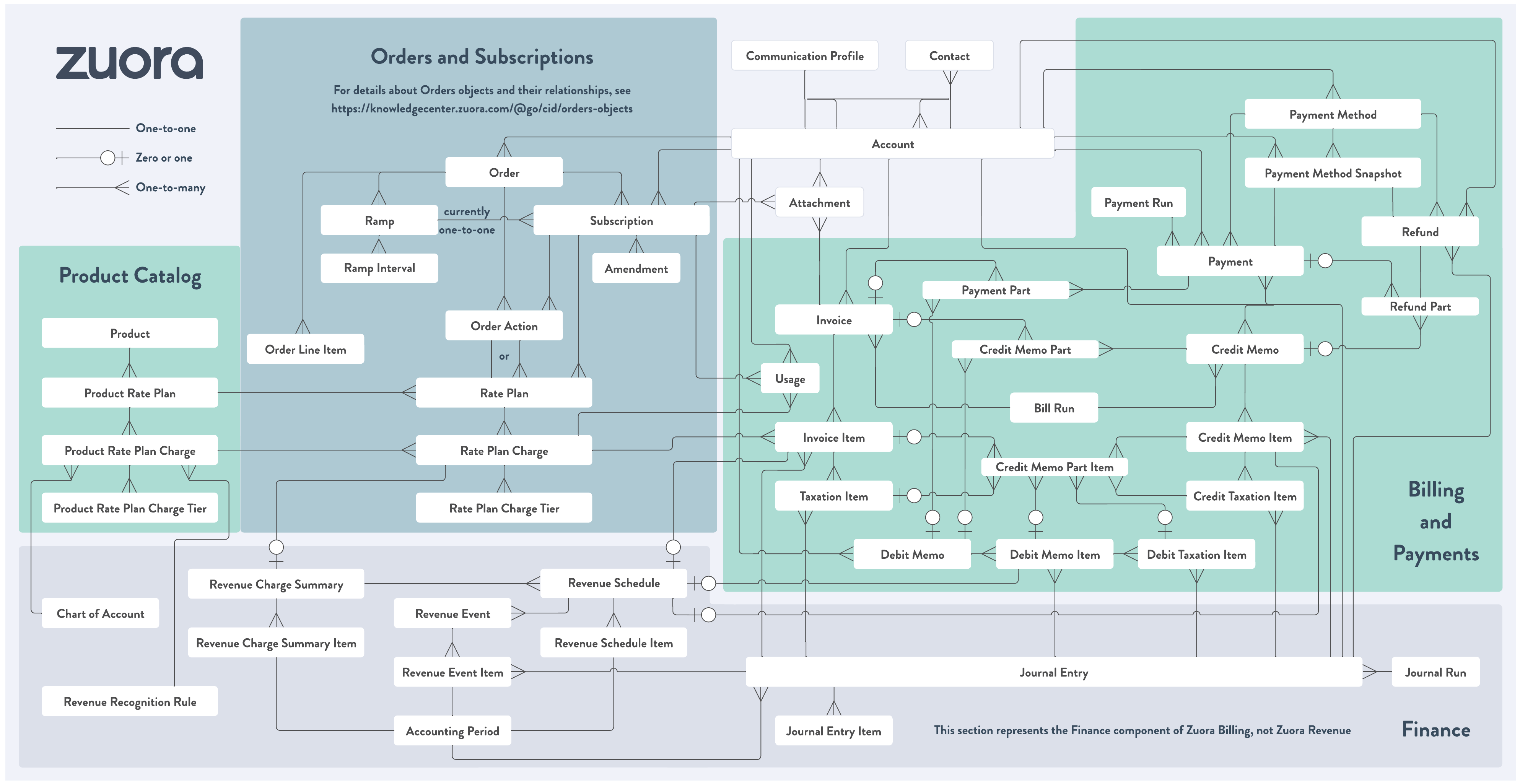
システム間のデータ問題を減らすため、Zuora ビリングオブジェクトモデルと CustomersDot の 1:1 マッピングを確保することを目標としています。
Zuora と Salesforce の統合オブジェクトモデル
Zuora CPQは Zuora と Salesforce を接続するために使用されます。
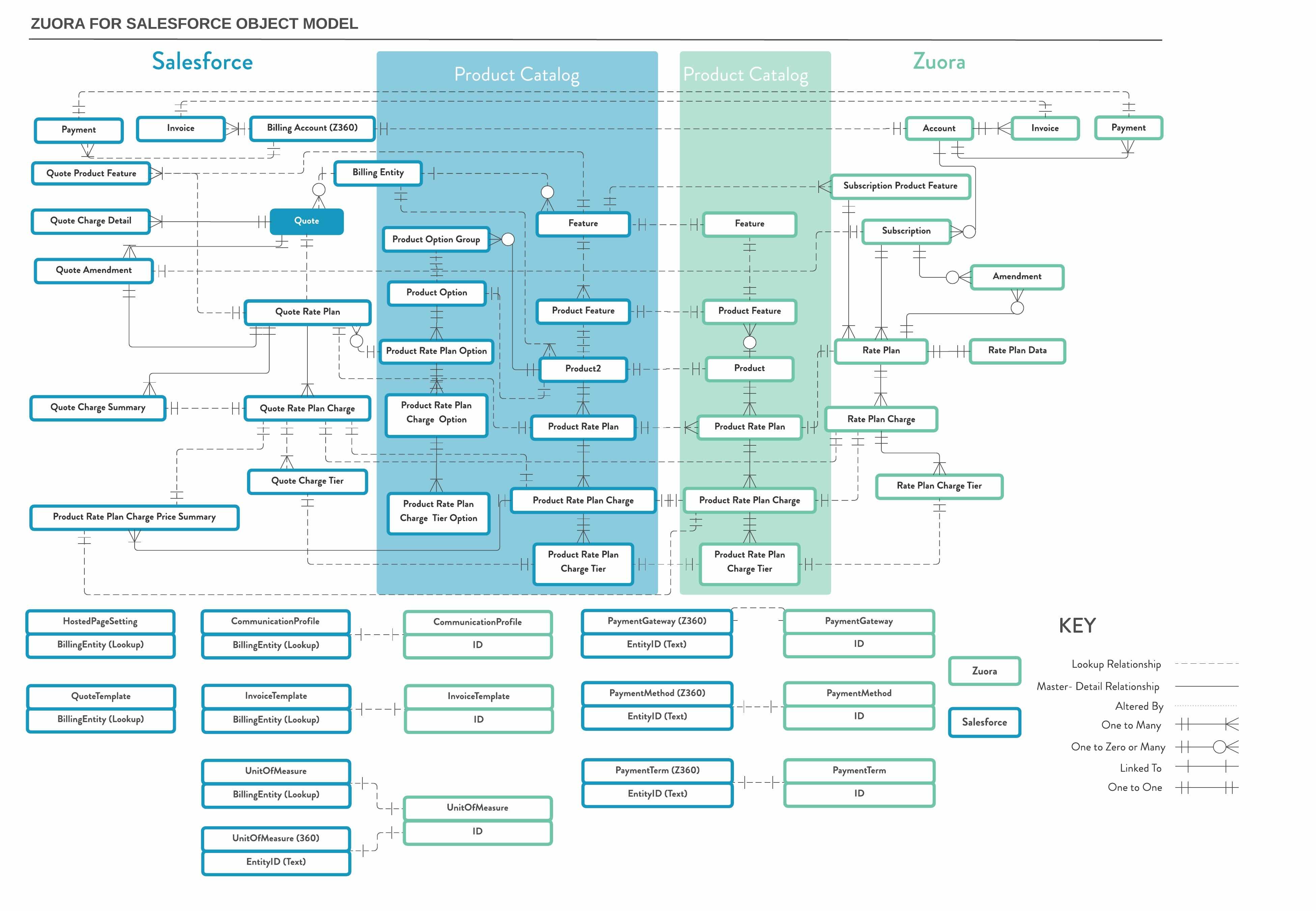
請求アカウントマスターデータオブジェクト
BillingAccountは、支払い顧客の最も重要なアカウント情報(連絡先情報、支払い条件、支払い方法など)を保持するコアビジネスエンティティです。この情報は、サブスクリプション、修正、請求書や支払いなどのトランザクションを追跡するために使用されます。このマスターデータオブジェクトのデータは、有料顧客の請求情報をよりよく理解するため、いくつかの GTM、製品使用状況、データサイエンスの傾向モデルで積極的に使用されています。
まず、BillingAccount EntityのConformed Dimensionを開発するために、Zuora ビリングアカウントと CDot ビリングアカウントのデータアーキテクチャの整合性の向上に焦点を当てました。
CDot のCustomerモデルには、個人ユーザー(Contact)と組織(Account)の両方を表す既知の設計上の欠陥があります。このエピックの調査はこの SpikeIssueに記載されています。
プロジェクト
以下は、Quote to Cash チームがシステムをより適切に整合させるために実施しているアーキテクチャプロジェクトです。
Fulfillment データアーキテクチャ計画
Fulfillment チームは Quote 2 Cash システム、特に CustomersDot を、より高い信頼性、持続可能性、柔軟性を促進する方法で再アーキテクチャを進めています。このハンドブックページは、機能部門ページとアーティファクトへのリンクを持つ Q2C システムの SSOT として機能します。
- Fulfillment SSOT プラン: data_architecture
- Central Data Team SSOT プラン: data_architecture
- Sales Systems SSOT プラン: 追加予定
- Enterprise Apps SSOT プラン: data_architecture
Zuora はサブスクリプションが購入された後のZuora AccountとZuora Contactデータのソースオブトゥルースとして機能します。購入前には、ユーザーが CDot に登録し、CustomersDotBillingAccount(まだ存在しないため)に関連付けられていないCustomersDotUserレコードが作成されます。購入後、CustomersDotBillingAccountレコードが関連するCustomersDotBillingAccountMembershipとともに作成されます。
CustomersDotUser/ZuoraContactおよびCustomersDotBillingAccount/ZuoraAccount情報は、ユーザーが直接 CDot や Zuora(あるいは SFDC を通じて間接的に)で編集できるため、CDot と Zuora 間でのデータ同期に注意が必要です。特に、Zuora コールアウトを CDot と Zuora 間のCustomersDotBillingAccountとCustomersDotUserレコードの同期に使用できない場合、Zuora カスタムイベントを検討します。
CDot のCustomersDotUserレコードは 1 つのメールアドレスに紐付けられています。このメールアドレスは複数のZuoraAccountに関連付けられており、したがって複数のZuoraContactを持つことができます。各ZuoraContactは独立して変更できます。例えば、請求管理者が米国の請求エンティティの Contact A のアドレスを変更したいと思うかもしれませんが、同じメールアドレスに関連付けられた Contact B(欧州の請求エンティティ用)のアドレスは変更しないかもしれません。この理由から、コンタクトメタデータは最終的にCustomersDotBillingAccountMembershipモデルに格納される可能性がありますが、スコープを減らすためにまずは軽量に保ちます。最初は Zuora からこのデータを取得します。
CustomersDot BillingAccount 管理
CustomersDot BillingAccount の導入
- CustomersDot 管理における Bill To / Sold To 連絡先管理の改善 - 完了
- イテレーション 1A: CustomersDot BillingAccount と Users を Zuora オブジェクトに整合させる - 完了
- イテレーション 1B: 単一の CustomersDot BillingAccount が複数の CustomersDot Users を持てるようにする - 90%完了
- イテレーション 1C: 単一の CustomersDot User が複数の BillingAccounts を持てるようにする - 未着手
- イテレーション 1D: レガシーデータオブジェクトのクリーンアップ - 未着手
背景
このエピックでは、ZuoraBillingAccounts との整合性を高めるための CustomersDot のデータアーキテクチャの改善に焦点を当てています。CDot のCustomerモデルには、Zuora Contact(個人ユーザー)と ZuoraAccount(組織)の両方を表す既知の設計上の欠陥があります。
問題
現在の CustomersDot(CDot)は、いくつかの異なる機能を果たすデータオブジェクトCustomer(例:customers DB テーブル)を持っています:
- CustomersDot にログインできるメールアドレスを持つユーザー
- 名前、メール、住所などのメタデータを持つ会社内の特定の人物に関連する連絡先情報
- 会社名を含む Zuora アカウントに関連付けられた会社情報
Zuora アカウントは、多くのユーザーやコンタクトを持つことができる会社/顧客アカウントにマッピングされることに注意することが重要です。特定の 1 人のユーザーにマッピングすべきではありません。現在のアーキテクチャでは、zuora_account_idは複数の Customer と共有できますが、これは理想的ではありません。Zuora のデータ構造とビジネスモデルを正確に反映するアーキテクチャが必要です。CustomersDot では、Zuora の Billing オブジェクトモデルを正確に反映するデータアーキテクチャが必要です。
これから恩恵を受ける Issue の例
計画
Zuora のデータ構造をより反映させるために、CustomersDot のデータアーキテクチャにいくつかの新しいモデルを追加することをお勧めします。
最も重要なのは、CDot にはCustomersDotBillingAccount(別名「会社」/「請求エンティティ」)のモデルがないことです。このモデルを追加することで、現在のCustomersDotCustomerモデルにある BillingAccount レベルに属するデータを分離できます(以下の例を参照)。また、現在の命名が Salesforce のSalesforce Customerの定義とは異なるため混乱を招くことから、CustomersDotCustomerモデルをCustomersDotUserに名称変更します。
zuora_account_idcompany_namevat_codesalesforce_account_id
さらに、CustomersDotBillingAccountとCustomersDotUserモデル間に結合テーブル(例:billing_account_membershipsテーブル)を追加することで、CustomersDotBillingAccountが複数のCustomersDotUserを持てるようになります。同様に、CustomersDotUserは多くのCustomersDotBillingAccountに関連付けることができます。
このデータ構造で、CDot はCustomersDotBillingAccountとCustomersDotUserのデータ構造を、CDot のユーザーがZuoraAccountのサブスクリプションを表示/管理するためのアクセス権を持つべきかどうかを判断する方法として考慮する必要があります。CDot は Zuora に依存して、ZuoraAccountのコンタクトが誰であるか、およびそのメタデータ(名前、住所など)のソースオブトゥルースを提供することができます。
現在、CDot はサブスクリプションアカウントに関連する SoldTo コンタクト用のCustomersDotUserレコードを作成します。このエピックでは、同じサブスクリプションアカウントの BillTo コンタクト用にもCustomersDotUserレコードを作成することができますが、これは要件ではありません。これにより、両方のタイプのコンタクトが CDot にログインしてアカウントのサブスクリプションを管理できるようになります。
CustomersDot User をなぜ CustomersDot BillingAccount と多数関連付けられるようにするのか?
CustomersDotUserを単一のCustomersDotBillingAccountにのみ関連付けることを検討しましたが、以下の理由から多対多マッピング機能を構築すべきと判断しました:
- Zuora は現在、1 人のユーザーが複数の請求アカウントにマッピングできることを許可しています。
- 本番環境ではこれがすでに起きている例が見られます(Zuora では現在 1800 人以上のユーザーアカウントが複数の BillingAccount にマッピングされています)。
これを有効にすることで、CustomersDot と Zuora の間でパリティが実現します。
更新:CDot は Zuora ビリングモデルに整合させるためにBillingAccount、BillingAccountMembership、BillingAccountContactモデルを追加しました。
ソースオブトゥルース
Zuora はサブスクリプションが購入された後のZuoraAccountとZuoraContactデータのソースオブトゥルースとして機能します。購入前には、ユーザーが CDot に登録し、CustomersDotBillingAccount(まだ存在しないため)に関連付けられていないCustomersDotUserレコードが作成されます。購入後、CustomersDotBillingAccountレコードが関連するCustomersDotBillingAccountMembershipとともに作成されます。
CustomersDotUser/ZuoraContactおよびCustomersDotBillingAccount/ZuoraAccount情報は、ユーザーが直接 CDot や Zuora(あるいは SFDC を通じて間接的に)で編集できるため、CDot と Zuora 間でのデータ同期に注意が必要です。特に、Zuora コールアウトを CDot と Zuora 間のCustomersDotBillingAccountとCustomersDotUserレコードの同期に使用できない場合、Zuora カスタムイベントを検討します。
CDot のCustomersDotUserレコードは 1 つのメールアドレスに紐付けられています。このメールアドレスは複数のZuoraAccountに関連付けられており、したがって複数のZuoraContactを持つことができます。各ZuoraContactは独立して変更できます。例えば、請求管理者が米国の請求エンティティの Contact A のアドレスを変更したいと思うかもしれませんが、同じメールアドレスに関連付けられた Contact B(欧州の請求エンティティ用)のアドレスは変更しないかもしれません。この理由から、コンタクトメタデータは最終的にCustomersDotBillingAccountMembershipモデルに格納される可能性がありますが、スコープを減らすためにまずは軽量に保ちます。最初は Zuora からこのデータを取得します。
CustomersDot のサインインオプションとして GitLab.com SSO のみを使用
CustomersDot の唯一のサインインオプションとして GitLab.com SSO を使用することで、レガシーのサインアップ(メールとパスワード)を排除し、将来的なサードパーティの e コマースプロバイダーとの統合のために CDot を準備できます。 私たちの目標は、サブスクリプション情報へのアクセス方法において、SaaS/Self-Managed と Web 直販/Sales Assisted 顧客間のエクスペリエンスを合理化することです。
全体的に、これにより CDot での顧客のためのより安全な環境が実現され、CDot 顧客と GitLab.com アカウントの 1:1 関係を確立できます。
GitLab.com SSO を CustomersDot の唯一のサインアップオプションとして
- CDot SSO: メールとパスワードのサインアップを削除
- CDot SSO: CDot への初回ログインのエクスペリエンス強化
- CDot SSO: より多くの CDot 顧客を GitLab SSO でのログインに移行
CustomersDot の Order を Zuora の Order に整合させる
この作業は、CustomersDotOrderテーブルを分割し、ZuoraSubscriptionsテーブルをより代表するデータ構造に向かうことに焦点を当てています。
詳細はアーキテクチャブループリントを参照してください。
CustomersDot の Order を Zuora オブジェクトに整合させる
- フェーズ 1: Zuora キャッシュモデルを実装する
- フェーズ 2: Zuora キャッシュ同期とバックフィルを実装する
- フェーズ 3: Zuora キャッシュモデルを活用する
- フェーズ 4: CDot Order を Subscription で置き換える
Snowflake データウェアハウスと Dbt(data build tool)
Quote to Cash システムから Snowflake へデータを抽出し、dbt を使用してレポートと分析のためのデータモデルに変換します。
データアーキテクチャ計画
Fulfillment チームは Quote 2 Cash システム、特に CustomersDot を、より高い信頼性、持続可能性、柔軟性を促進する方法で再アーキテクチャを進めています。新しいアーキテクチャの重要な成果の 1 つは、CustomerDot、Zuora、Salesforce 間で同じ顧客定義を持つことです。この定義は Zuora の BillingAccount に基づいており、顧客のキーは billing_account_id です。CustomersDot データテーブルに顧客定義を整合させるために、Snowflake と dbt のデータモデルを再アーキテクチャする必要があります。Zuora と Salesforce システムをモデル化して構築されたデータモデルは正しい顧客定義を持っており、現時点ではそれらのモデルの再アーキテクチャは不要です。
統合 Q2C データモデルにおける顧客定義の重要な注意事項:
- 統合顧客キーは Billing_Account_Id であり、システムを結合します。Billing_Account_Id は Q2C システムに以下のように存在します:
Zuora.Account.Account_IdCustomersDot.Billing_Accounts.Billing_Account_IdSalesforce.Billing_Account.Billing_Account_Idドラフト: GitLab_Dotcom.Organization.Billing_Account_IdOrganization Entity Object は GitLab_Dotcom にまだ作成されておらず、検証プロセスの途中です。Billing Account Id 外部キーはまだ決定されていません。
- billing_account_id のソース ID データ(データが発生して SSOT とみなされる場所)は Zuora にあります。
- 顧客定義は、Zuora と Salesforce にある請求アカウントに対してのみ統合されており、一般的に有料・過去に有料であった顧客と Edu/OSS の顧客に限定されます。
- トライアルの目標状態は Zuora に入れることです。その時点で、CustomersDot、Salesforce、Zuora にわたるトライアル ToPaid アクティビティについての統一された顧客定義を持つことができます。
- Q2C システムをまたいだ Free 顧客の顧客定義の統一方法の目標状態はまだ決定されていません。無料ユーザーの数は、Salesforce と Zuora に入れることに課題を提示します。この領域についてはさらに探索が必要です。
- Salesforce の Account オブジェクトは、請求アカウントを持つ顧客または請求アカウントを持たない見込み顧客アカウントを持つことができます。
Q2C の再アーキテクチャは、各フェーズの予想される成果と成果物について対象者と他のクロスファンクショナルチームへの明確なコミュニケーションとともに、さまざまなフェーズで実施されます。
整合次元(Conformed Dimensions)
整合次元は、エンタープライズ全体で一貫したレポートを確保しながら、複数のファクトやデータマート間で同じ方法でファクトと指標を分類・記述することを可能にします。
整合次元はマスターデータに対応し、あらゆるデータウェアハウジング環境の重要な構成要素です。
以下のマスターデータオブジェクトがコアビジネスエンティティのために作成され、組織全体のさまざまなアプリケーションで使用でき、関連するメタデータ、属性、定義、ロール、接続、タクソノミーも含まれます。
- BillingAccount
- Customer/User
- Organization
- Order
- Lead
- License
Snowflake と Dbt でのマスターデータオブジェクト開発作業は、次の 2 つの Epic で追跡されています:BillingAccount、Orders、RampsとCustomers、Contacts/Users、Leads。
以下は Snowflake における再アーキテクチャされたデータモデルの Entity Relationship Diagram です。Target State タブには、CustomersDot、Zuora、Salesforce、GitLab.com ソースシステムから抽出したビジネスエンティティが互いにどのように接続するかが示されています。
コアビジネスオブジェクトの整合次元設計
BillingAccount マスターデータオブジェクト/エンティティ(整合次元設計)
Order マスターデータオブジェクト/エンティティ(整合次元設計)
Customer/User マスターデータオブジェクト/エンティティ(整合次元設計)
a1f3c26a)